01: Kerala Mural Archive (2023-Ongoing)
The Kerala Mural Archive is a born-digital repository of Kerala mural paintings, developed as part of my doctoral research at IIT Jodhpur. The archive documents murals across several temple sites, with attention to high-resolution visual documentation, contextual metadata, and multilingual access in eight Indian languages including Malayalam, Tamil, Hindi, and Telugu.
The project's design reflects a core research concern: that digital archives are not neutral containers but active mediators of cultural meaning. Decisions about structure, access, and presentation are treated as interpretive choices, informed by scholarship in digital heritage, postcolonial archival theory, and interface design. The archive is live and publicly accessible.
Status: Ongoing | Access: Open | Site: keralamuralarchive.in
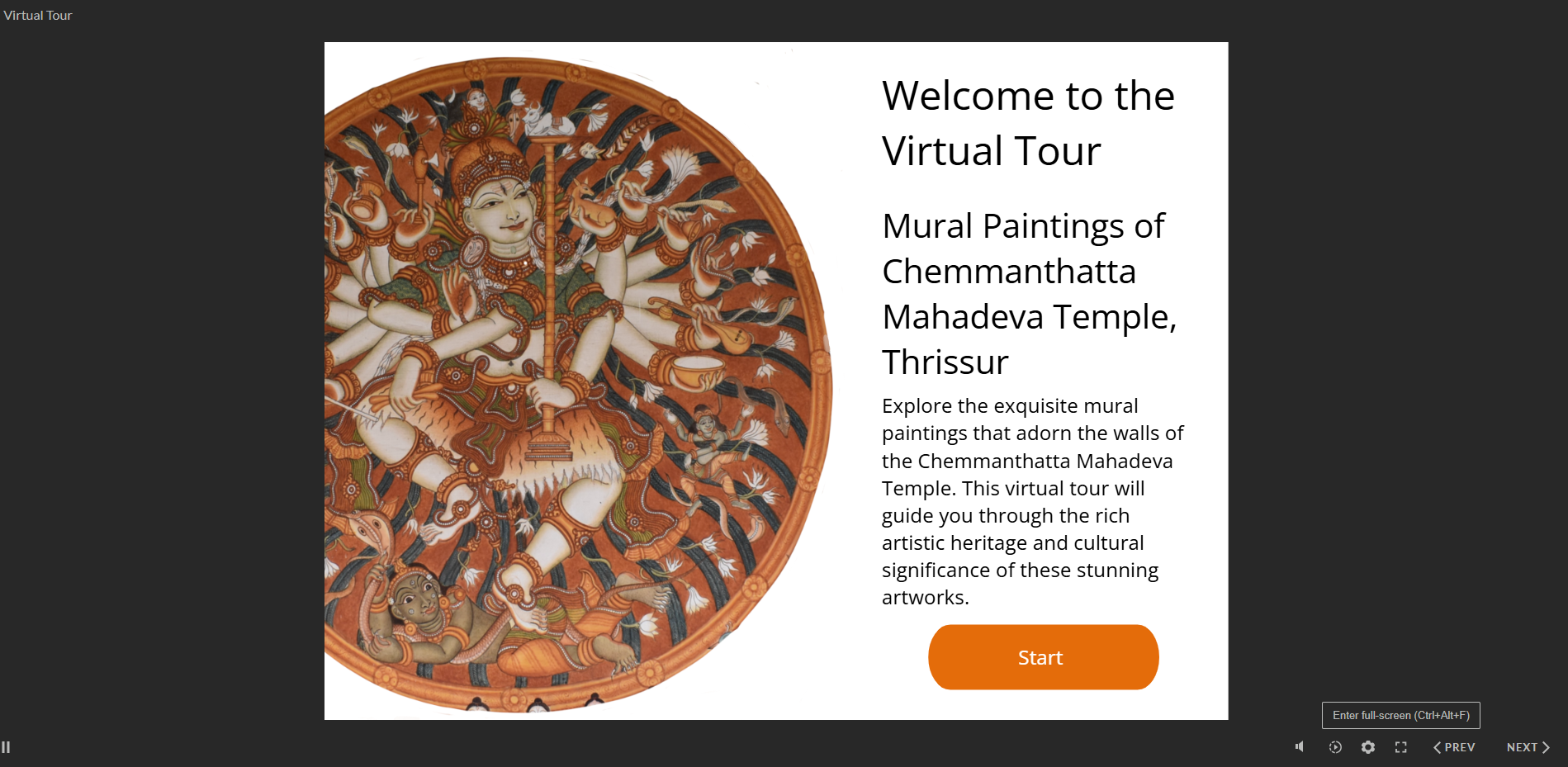
02: 360° Virtual Tour and Audience Evaluation of Kerala Temple Murals (2024–2026)
This project develops and tests an immersive format for encountering Kerala murals in digital space. Working at Chemmanthatta Mahadeva Temple, I created a 360° virtual tour of the temple's mural programme and designed an evaluation methodology to assess how visitors engage with the work through this format — examining attention, navigation behaviour, and interpretation. The methodology is designed to be reproducible and transferable to other temple sites and digital formats. It addresses a gap in digital heritage practice: most digitisation projects document objects without studying how audiences actually receive them. This project was presented as two research posters at the DARIAH Annual Event (May 2026) and as a short paper at the ADHO Annual Conference (July 2026).
Status: Completed| Presented at: DARIAH 2026, ADHO 2026
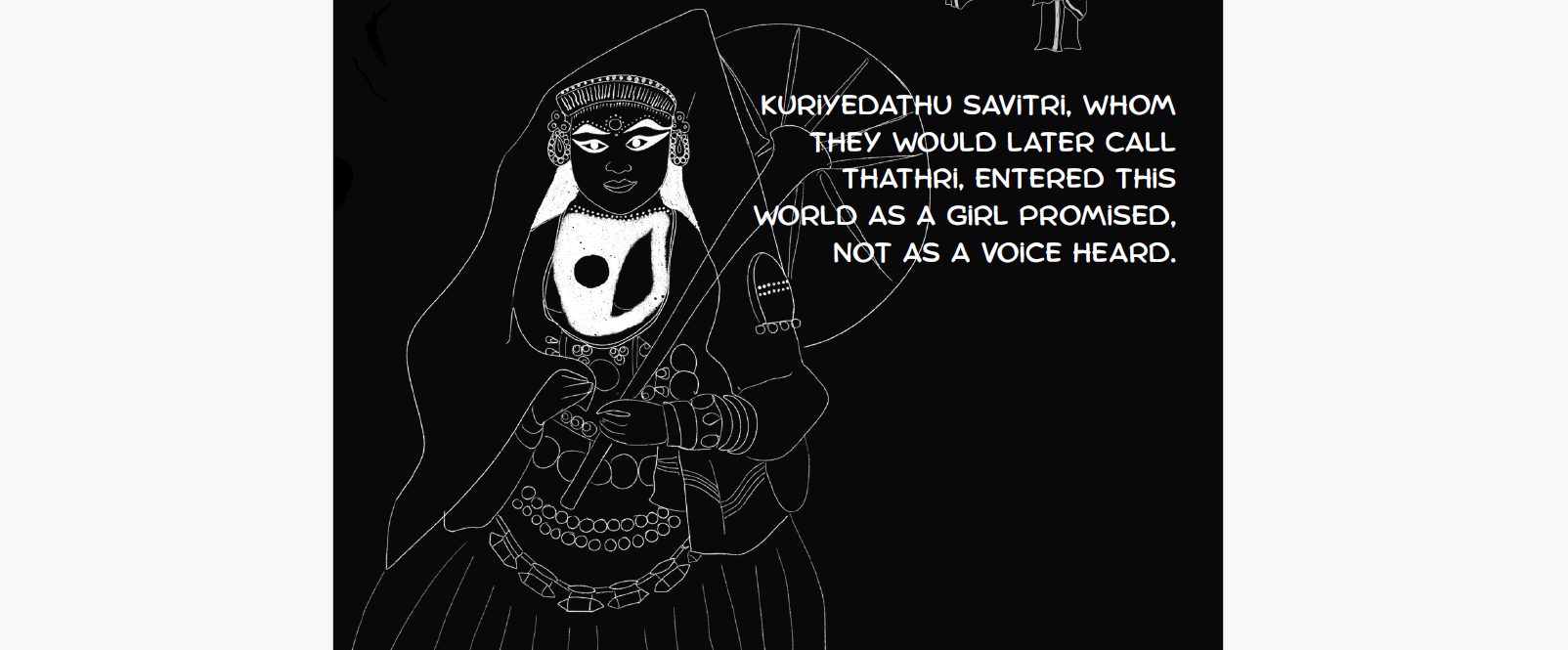
01: Visual Narrative Experiment: The Thathry Comic
An experimental study on the reinterpretation of culturally-specific narratives through sequential imagery. Through the use of comics as the medium for such an experiment, the study looks at how temporality, frame construction, and visual accentuation affect the original narrative, which is steeped in history and culture.
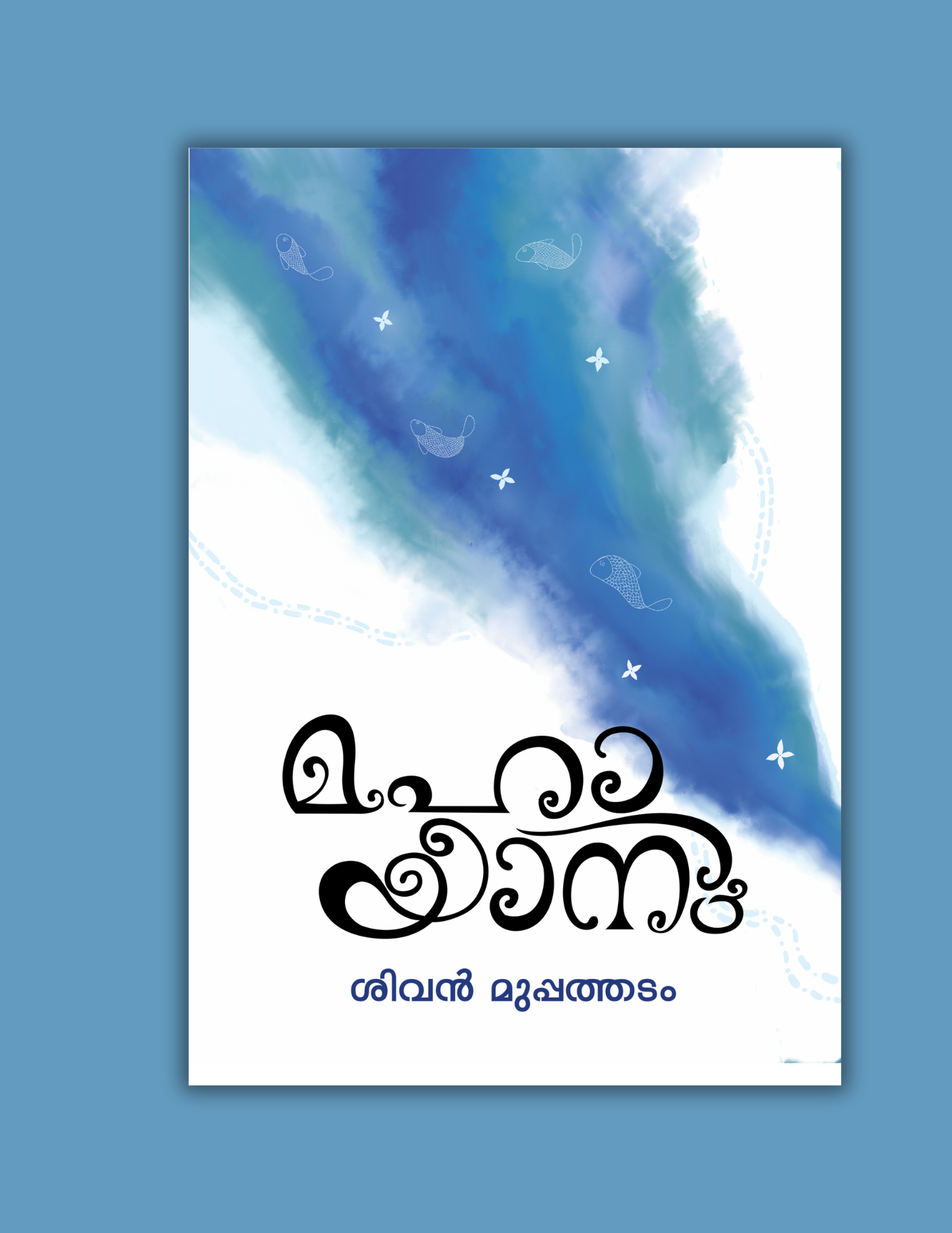
02: Book Cover Design: Mahayanam by Sivan Muppathadom
A commissioned book cover design for an anthology of Malayalam poems by Sivan Muppathadom. The design uses the Periyar river as its visual and conceptual axis, with the Aluva bridge on the back cover. A practice-based piece that sits at the edge of design and cultural interpretation.