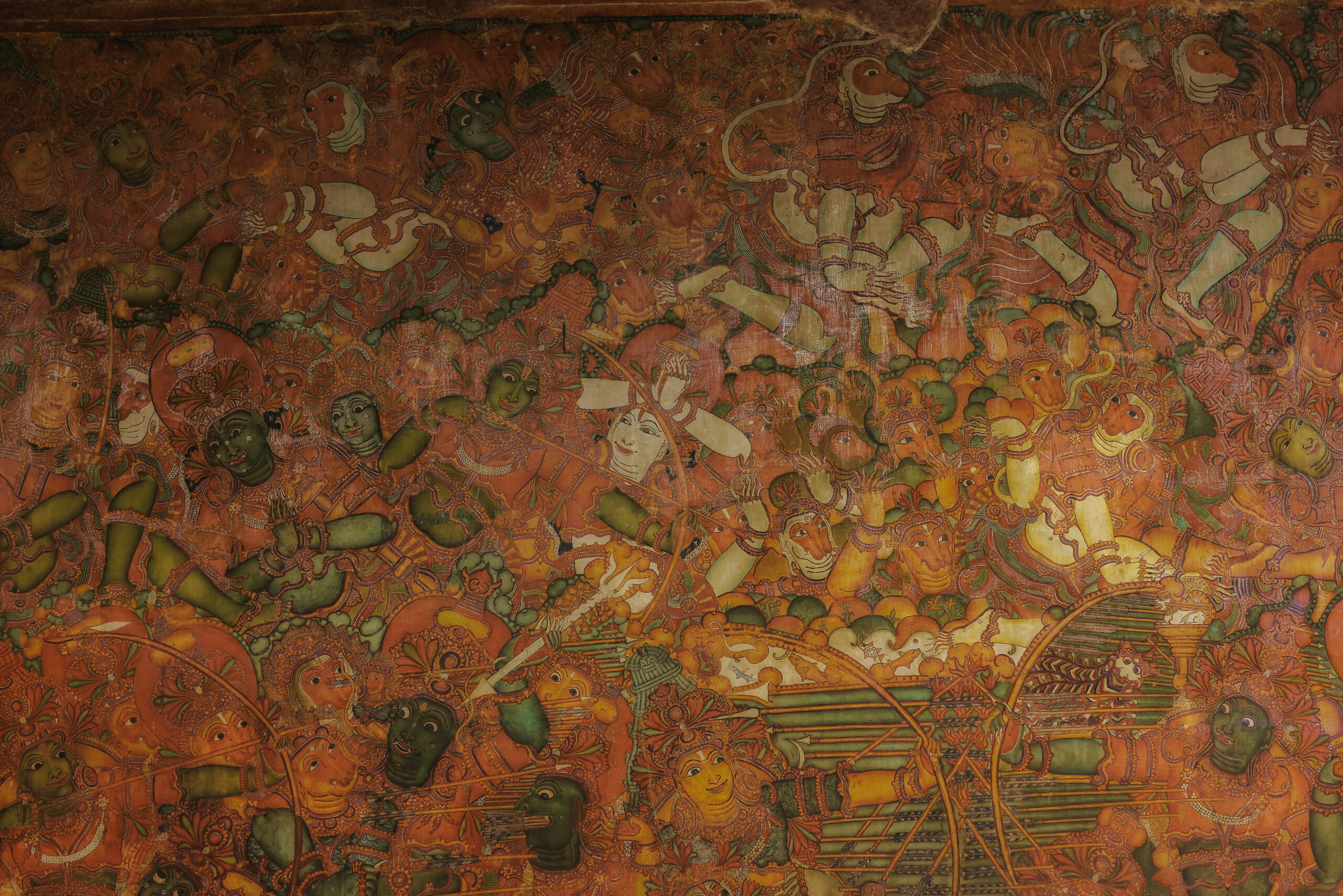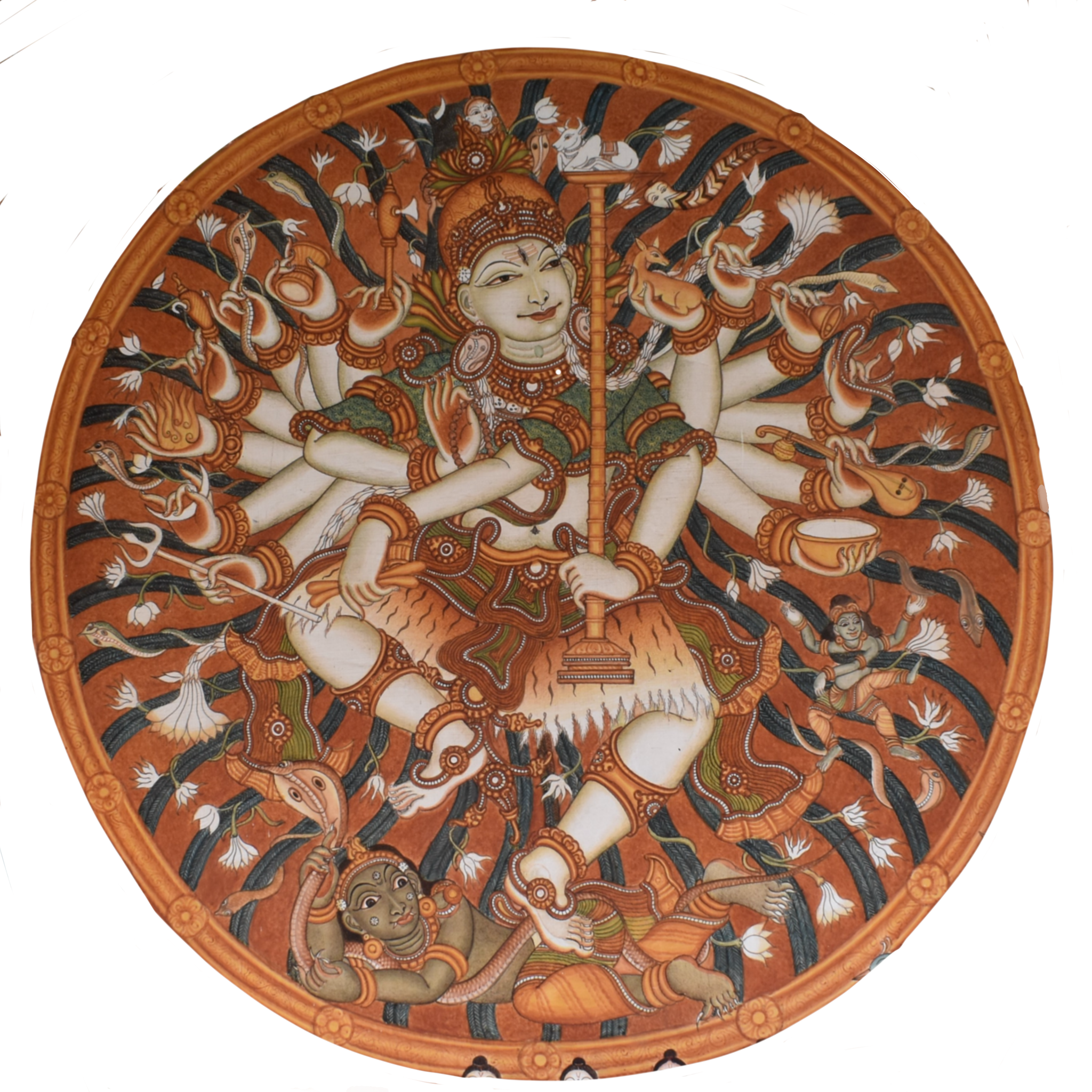
My research examines the digital mediation of Kerala mural paintings — specifically, how visual meaning, spatial experience, and cultural context are transformed when sacred art moves from the temple wall to the screen. Rather than treating digitisation as neutral reproduction, I approach digital formats as active mediators that restructure how visual heritage is seen, navigated, and understood.
This work is grounded in visual and media studies, with particular engagement with theories of remediation (Bolter and Grusin), the politics of the image (W.J.T. Mitchell), and debates around aura and reproducibility that extend from Benjamin into digital cultural heritage. I am also in conversation with scholarship on South Asian visual culture and the growing field of digital heritage studies.
How do interfaces structure the act of looking? When a mural is viewed through a screen or a virtual tour, the interface determines what is visible, at what scale, in what sequence, and with what forms of interaction. My research examines how these interface conditions produce different kinds of visual attention and interpretive possibility than the original architectural encounter.
Kerala murals are not paintings in the conventional sense — they are embedded in the spatial, ritual, and architectural experience of the temple. My research investigates what is gained and lost when this spatial context is abstracted away, and whether digital formats (particularly immersive ones like 360° tours) can reconstitute meaningful aspects of situated viewing.
A practical strand of my research develops and tests methodologies for evaluating how audiences actually experience digitised murals. I am building a reproducible workflow that can be applied across different digital formats and temple sites. This work was piloted at Chemmanthatta Mahadeva Temple and presented at DARIAH and ADHO in 2026.
My ongoing research continues on the path of formulating approaches to exploring how visual cultural heritage might be engaged in the digital realm.
Examples of my experimental practices and outcomes are featured in the Projects section.
My research combines theoretical inquiry with practice-based exploration, drawing on:
(a) visual and media studies
(b) digital humanities approaches to cultural heritage
(c) comparative analysis of physical and digital viewing conditions
Rather than treating digital formats as neutral containers, I approach them as active mediators that shape how visual culture is encountered.
My doctoral thesis, Murals and Digitality: An Exploration of the Digital Remediation of Kerala Mural Paintings, pursues two primary objectives. First, it explores the role of digital archives as tools for preserving cultural heritage, using Kerala Mural Paintings as a case study. Through the creation of a prototype digital archive, the research investigates how digital platforms can help safeguard the artistic, cultural, and symbolic richness of this tradition while making it accessible to broader audiences. Second, the study examines the changing dynamics of viewership as murals transition from their original, site-specific contexts to digitally mediated environments. It also analyzes how audience perception, emotional engagement, and interpretive depth are shaped by this shift, drawing attention to the concept of “digital remediation” and “digital aura” and how it might redefine the authenticity and material presence of digitized artworks.
offers insights into the challenges and possibilities of using digital media for cultural preservation and proposes a nuanced understanding of how traditional art forms can continue to live, transform, and resonate in the digital age. The next phase of this research will extend the audience engagement methodology across more sites, with a view toward building scalable tools for community-accessible heritage documentation.
I am particularly interested in questions of non-Western interface design for heritage, multilingual access, participatory archiving and so on. I welcome conversations with researchers and institutions working at the intersection of digital heritage, visual studies, and South Asian cultural history.